Abdominal wall
Careful assessment of the midline and gradual diastasis exercises, matched to your level.
We're not here to give you back your "old body" — this is already a different, wiser body that has done something enormous. We help with postnatal recovery through careful assessment, breathing and a gradual return of strength — with your baby by your side, no rushing.
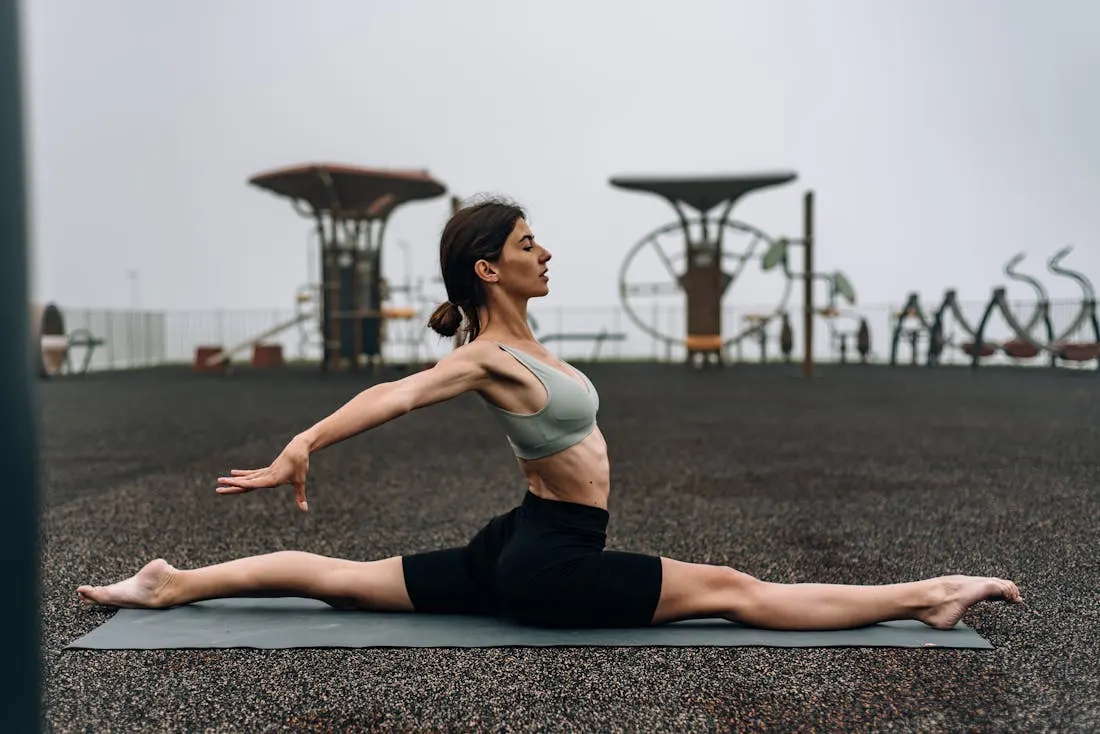
Your body after birth
Pregnancy and birth move through your body like a real transformation — and postnatal recovery is just as real a process as carrying your baby was. Your abdominal wall stretched for months to make room; in some women a small gap remains along the midline, which we call diastasis — put simply, the abdominal muscles have "moved apart" and need to learn to work together again.
Alongside this, your pelvic floor — the muscular "bowl" that carried the full weight of pregnancy — also needs attention and a gradual return of strength. Read more about pelvic floor and women's health if this topic feels especially close to you.
And your posture? The hours spent breastfeeding and carrying weigh on you literally — shoulders forward, a tight neck, a strained upper back. All of this is normal. It's not "something broken" to be fixed in a hurry, but a body that deserves a careful, competent return to strength and ease.
Careful assessment of the midline and gradual diastasis exercises, matched to your level.
Breathing and activation that supports recovery from the inside out — no straining, no rushing.
Stretching the tight neck, shoulders and upper back from breastfeeding and carrying your baby.
Short but effective postnatal workouts that bring back a feeling of strength, not exhaustion.
The first step matters
It's understandable to want to "tighten" your stomach quickly after birth — but classic crunches are often exactly the wrong first move with diastasis. In any ab exercise where the head and shoulders lift forward against resistance, the abdominal wall bulges outward along the midline. If a small gap is already there, this load only widens it instead of closing it.
That's why real diastasis exercises start from a completely different direction — from the deep abdominal muscles and breathing, not from a surface-level "six-pack" look. We first teach the body to connect the exhale with a gentle drawing-in of the belly, then gradually add stabilising postpartum ab exercises that close the gap from the inside, before we even reach more dynamic movement.
Diastasis recti exercises done in the wrong order or with the wrong technique can delay recovery by months. Done carefully and consistently, they're the surest path to a stable, strong core.
Our approach
Every postnatal workout with us starts with real listening — how you've been sleeping, how breastfeeding is going, where it hurts. No two cases are the same, and your pace is the only thing that matters.
Checking diastasis, breathing and overall posture at your first session with us.
We teach the body to consciously activate the deep abdominal muscles and pelvic floor together.
Releasing a tight neck, shoulders and lower back — where carrying and breastfeeding weigh the most.
No outside schedules or norms — we move forward exactly as fast as is good for your body today.
What makes us different
We know how it feels — finding a babysitter just to get to a class can sometimes be harder than the class itself. That's why at Stretching Varna your baby is welcome in the studio the whole time. Bring the stroller, the carrier, or just hold them — we work around your baby, not despite them.
There's no need to feel guilty about "taking time for yourself". The time for your postnatal recovery is time for the two of you — soft, calm, without pressure. If your baby needs feeding halfway through the session, we pause. If they fall asleep, we continue. The studio is small, women-only and warm — exactly what you need in this period.
Book a session for you and your baby →No guilt
Free consultation"Bring your baby. Really." — it's not a phrase, it's how we work every day.
It's important we say this
Before any postnatal exercise, the first stop is your postnatal check-up with an obstetrician-gynaecologist — usually around week 6 after a vaginal birth and a little later after a caesarean. We do not replace medical care and we do not give the green light instead of your doctor.
If at your check-up you notice a gap along the midline of your abdomen wider than 2–3 fingers, or you experience pain, pelvic pressure, or urine leakage when coughing or jumping — these are signs to seek a consultation with a specialist (a gynaecologist or a physiotherapist specialising in postnatal recovery) before starting more intense movement.
Once you have the green light, we're here — with careful assessment, realistic expectations and a pace that respects exactly where your body is today.
Frequently asked questions
We wait for your postnatal check-up — usually around week 6 after a vaginal birth and a little later after a caesarean. Once your doctor gives the green light, we start slowly, with breathing and a careful assessment, before any more intense movement.
Diastasis is a separation of the abdominal wall along the midline — natural during pregnancy, but it remains for some women after birth too. We check carefully with our fingers along the midline of your abdomen at your first assessment with us; if we suspect a wider gap or pain, we refer you to a specialist.
Yes, absolutely. Bring the stroller or the portable bassinet — your baby is welcome in the studio for the whole session. There's no need to find a babysitter or feel guilty about taking time for yourself.
In most cases, yes. Constantly carrying your baby and breastfeeding load the neck, shoulders and lower back in a predictable way — we work exactly on these areas with careful stretching and posture work, matched to your pace.
Breastfeeding doesn't get in the way of training — quite the opposite, many of our clients come exactly while breastfeeding. We'll adapt positions and intensity to how you're feeling in the moment, and pauses to feed your baby during the session are completely normal.
The Vibe
Explore More
Stretching Varna — Home · Pilates Varna · Yoga Varna · Splits & Flexibility · Postnatal Recovery · Online Training · Pelvic Floor & Women's Health
First step
Leave your Instagram or phone number and tell me briefly about yourself — I'll get in touch personally.
Find us
location
